The future of the user experience is in AI
In the hospitality sector, personalisation is no longer a nice-to-have – it's a basic requirement for competing online. In the immediate future, we will see a radical transformation of direct bookings, in which AI will shift from being a simple support tool to a fully-fledged strategic element at the centre of the interaction between hotels and potential guests. Travellers expect – and will increasingly expect in the future – every interaction, from discovering the property to booking and even the stay itself, to be shaped around their needs, preferences, and purchase intentions. Artificial intelligence makes all this possible on a large scale, transforming huge amounts of data into suggestions, content and navigation paths designed for the individual user, thus becoming the engine of the decision-making process rather than a mere technological "add-on".
Smarter data, prediction and decisions
Artificial intelligence applied to hospitality makes it possible to recognise recurring patterns in guest behaviour, identify clusters of users with similar needs and anticipate the most likely actions, such as the choice of a room type or a service package.
When a guest quickly finds what they are looking for, receives content consistent with their preferences and perceives real attention from the property, the likelihood that they will complete the booking and, more generally, have a positive and memorable experience increases. Real-time personalisation helps reduce abandonment rates, speed up decision-making, increase the average booking value, and improve overall brand perception – turning data and analysis into concrete actions that enhance every touchpoint with the guest.
From AI to hyper-personalisation and conversational selling
Hyper-personalisation is the strategy that leverages the capabilities of AI to go far beyond simple personalisation. It is not just about calling a guest by name or remembering a generic preference, but rather about collecting and analysing very detailed data in real time, in order to optimise the booking process, proposing relevant content at each stage, calibrating commercial levers such as pricing, special offers and upselling opportunities in a data-driven way.
Thanks to the integration of advanced digital systems and artificial intelligence, hotels can adapt every message, proposal and content to the tastes, habits and specific needs of each guest. The result is a direct booking experience that approaches a personalised, fluid and contextual human interaction. Hotels that invest in this direction will not only increase conversions, but also regain control, margins and a direct relationship with customers.
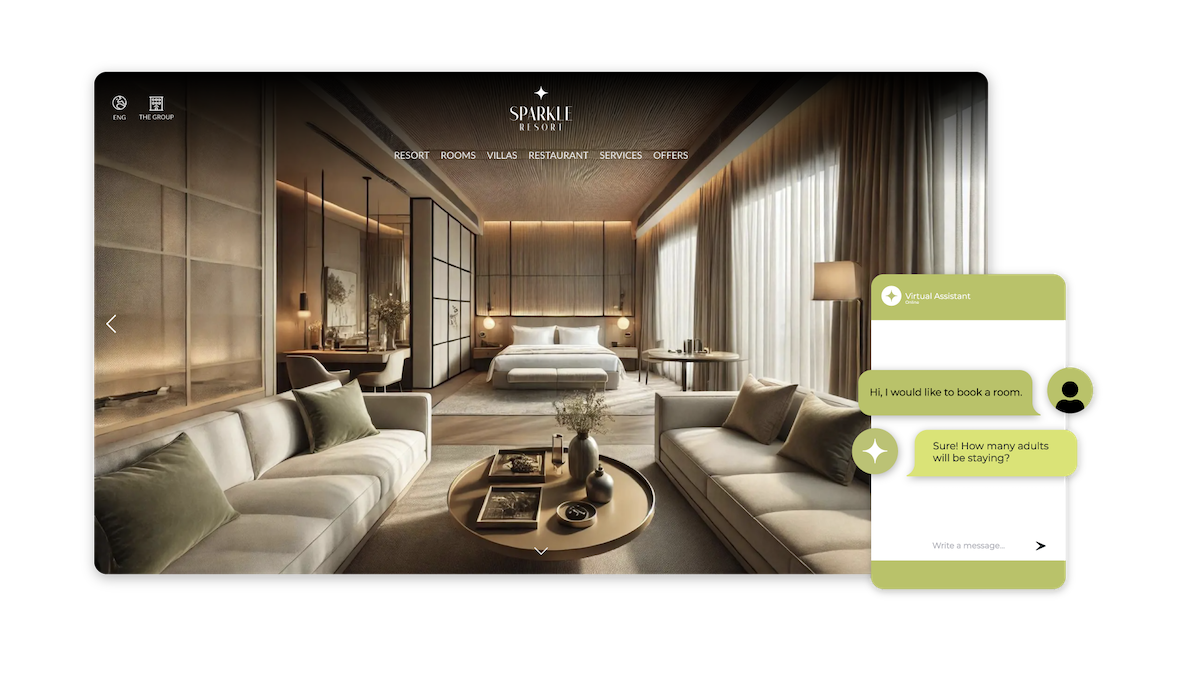
Conversational selling, as the name suggests, places conversation at the centre of the booking process. Advanced chatbots and latest-generation language models become true digital interlocutors, capable of understanding the user, interpreting their needs, suggesting tailor-made solutions and guiding them towards the most suitable choice. Conversation is no longer a parallel channel, but rather becomes an integral part of the funnel, acting as a bridge between inspiration and conversion. The goal is to replicate the experience of an experienced receptionist online: someone who does not just take a booking, but understands the guest, proposes alternatives and inspires confidence.
Integrated with hyper-personalisation, conversational selling transforms the booking engine into a true digital assistant capable of interacting with the user, increasing engagement and facilitating faster and better-informed decisions.
Hyper-personalisation and conversational selling in practice
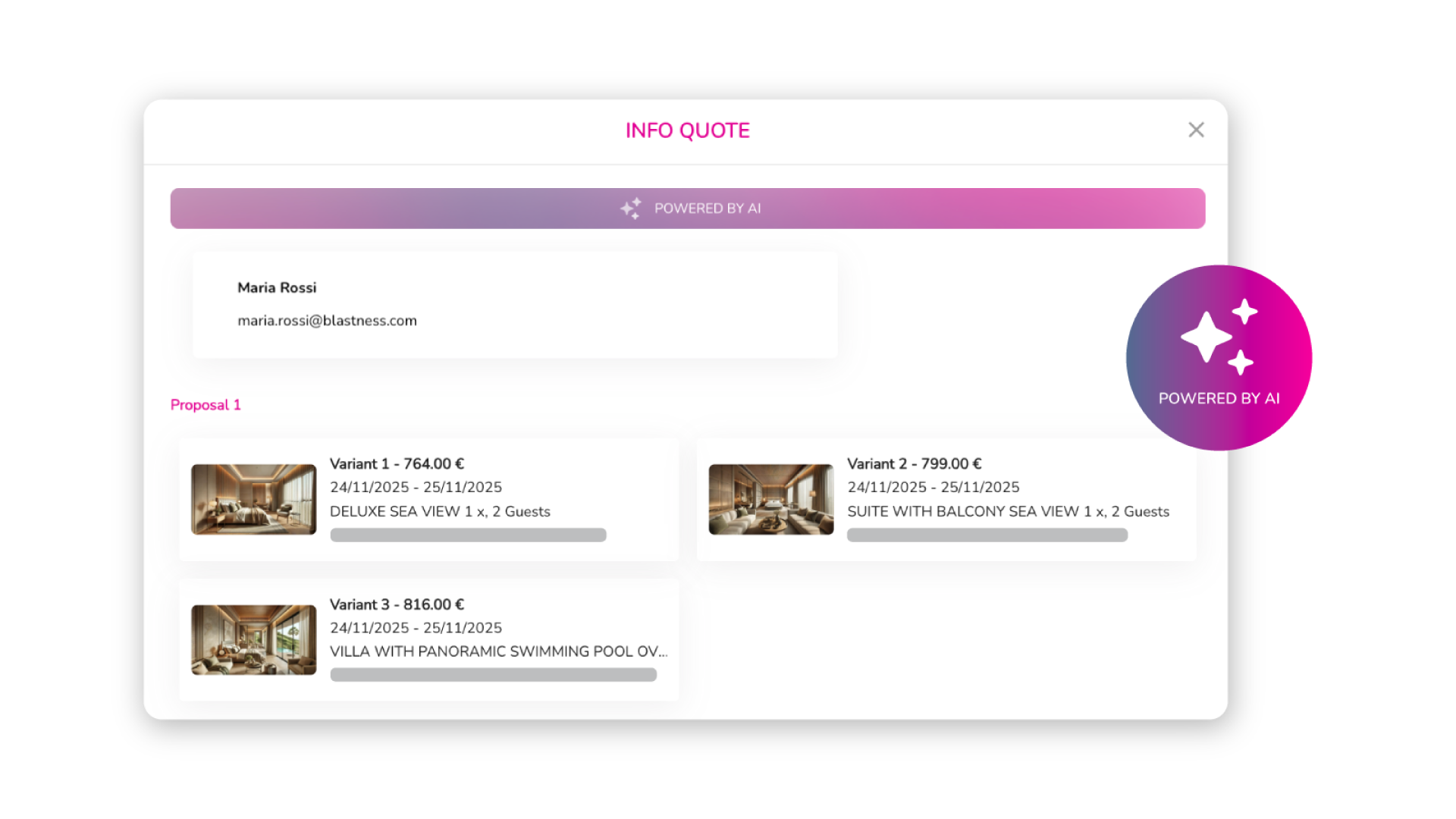
Hyper-personalisation takes concrete form through two solutions developed by Blastness. CRM allows hotels to systematically collect, structure and interpret their guests' data: purchasing habits, recurring preferences and browsing behaviour. This information becomes the basis for automatically generating offers, quotes and communications tailored to the individual customer, creating a consistent experience throughout all stages of the decision-making process.
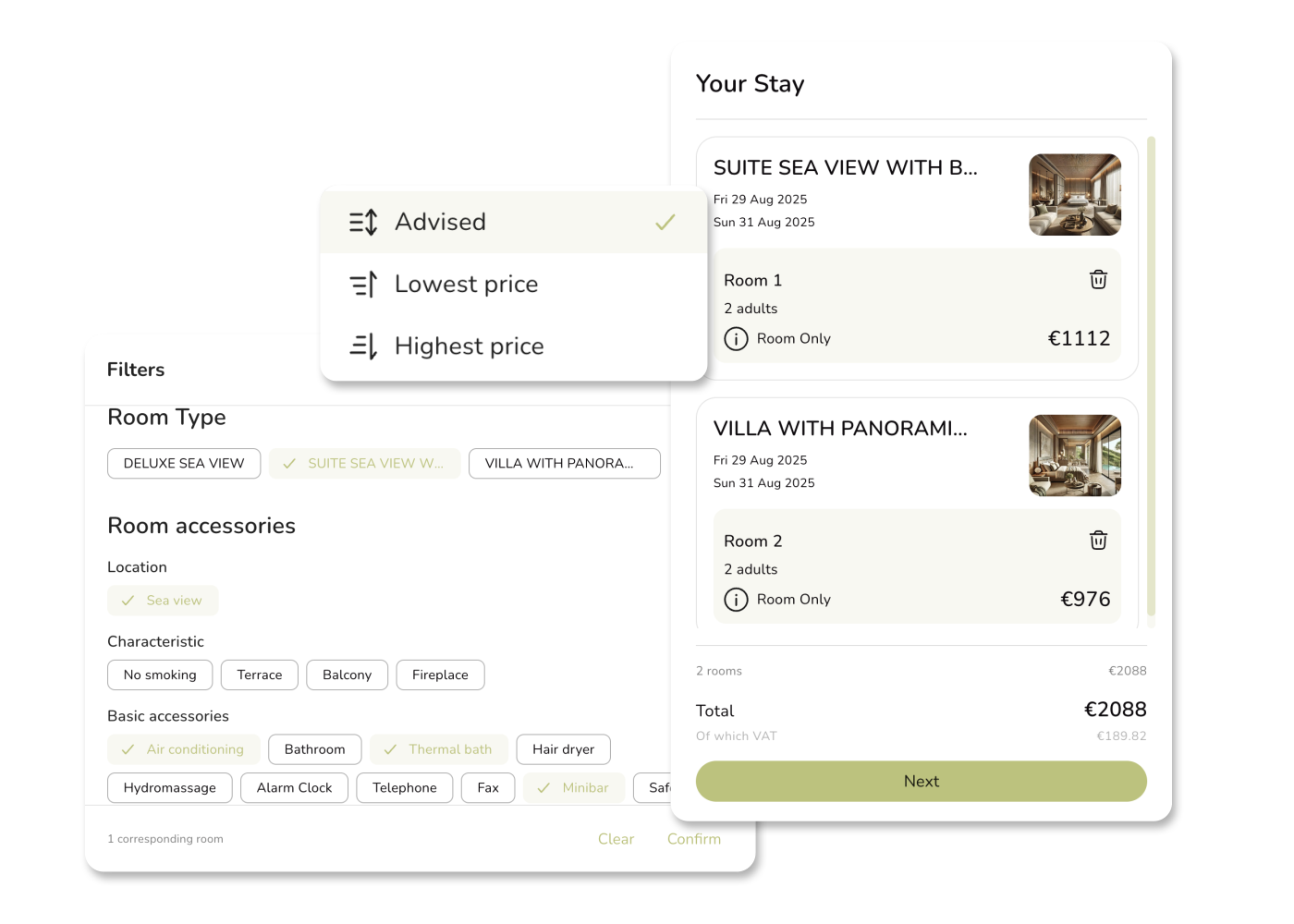
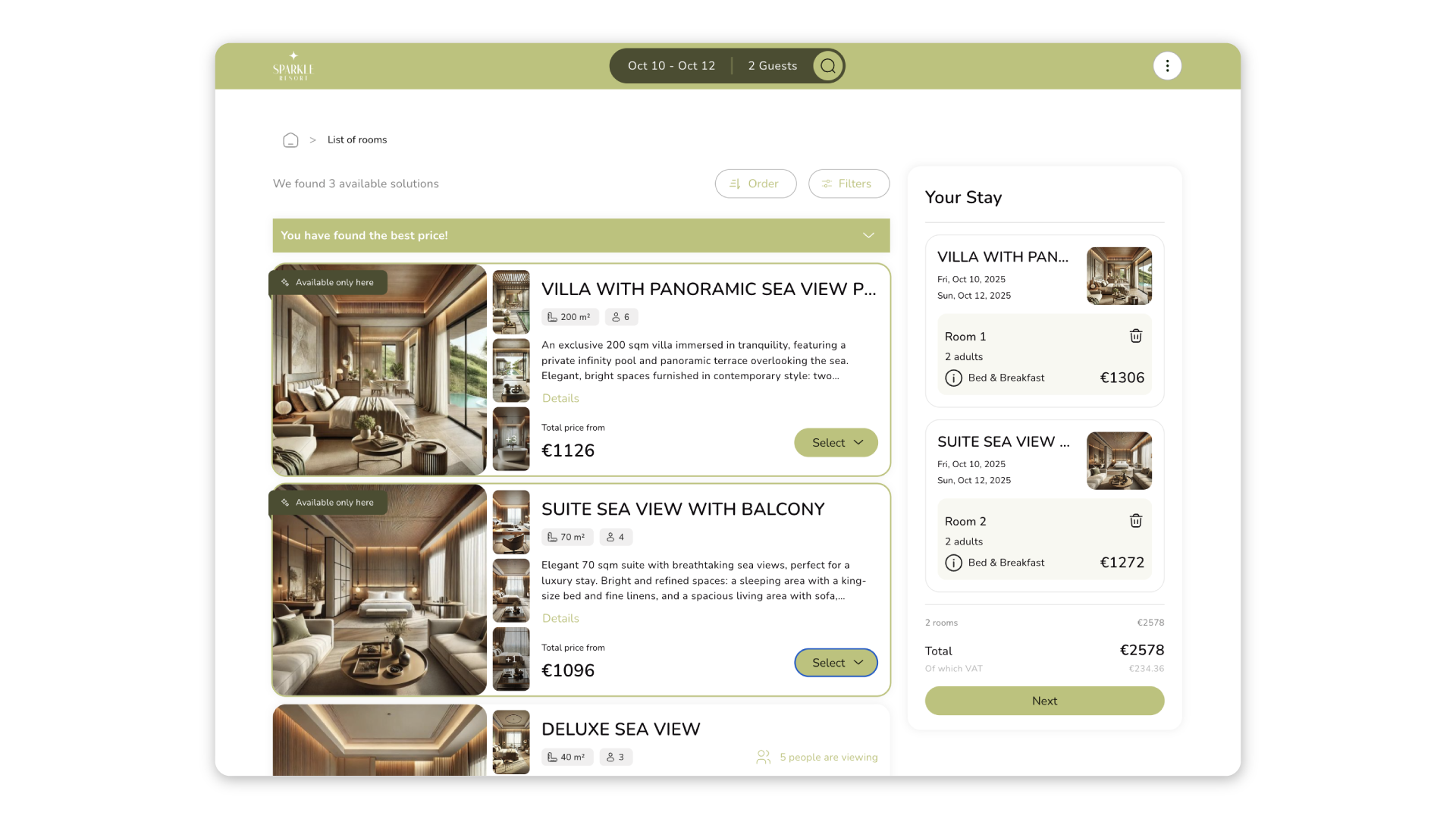
Within the booking journey, AIBE then comes into play – the artificial intelligence technology that brings personalisation directly into the booking engine. By analysing user actions in real time – from the dates selected to the number of guests, to the way they interact with rooms, rates and packages – AIBE dynamically adapts images, messages, direct booking benefits and proposals. Options are no longer displayed in a static order, but are reordered according to relevance for that specific visitor, increasing the likelihood that the ideal solution will appear immediately, without distractions. The result is an environment that does not just show availability and prices, but is transformed into a space that is capable of interacting with the traveller and guiding them in the most natural way towards the most relevant choice.
Ultimately, the true power of AI emerges when tools interact with each other in a fluid and integrated way. Only this synergy makes it possible to transform every interaction into a solid opportunity for direct booking, offering the traveller a consistent, personalised and real-time experience.
Discover more following the tags:
Do you want to discover how AI can boost your direct sales?
Contact us